
Vitamins for Male Fertility: A Science-Backed Buying Guide for 2026


Did you know that global sperm counts have declined by nearly 60% since 1973? It's a sobering statistic that highlights why so many men are now searching for effective vitamins for male fertility. If you feel overwhelmed by the sheer number of supplement options or worry about wasting your hard-earned money on "snake oil," your frustration is completely valid. It's difficult to find clear answers when labels are filled with confusing dosages and unfamiliar chemical forms.
Choosing the right support doesn't have to be a gamble. This science-backed guide uses the latest 2026 Global Andrology Forum (GAF) guidelines to help you identify which nutrients actually improve sperm quality and which ones are just hype. We'll explore the critical 90-day window of sperm production, the impact of oxidative stress, and how to select bioavailable ingredients that offer the best support for your fatherhood journey. You'll gain a clear understanding of evidence-based ingredients so you can make an informed purchase with total confidence.
Key Takeaways
- Learn how specific antioxidants protect sperm from oxidative stress to improve overall motility and concentration.
- Identify high-quality vitamins for male fertility by choosing bioavailable forms like 5-MTHF over synthetic alternatives.
- Understand the 90-day spermatogenesis cycle and why timing your supplement strategy is crucial for seeing measurable results.
- Discover how to decode supplement labels to avoid misleading proprietary blends and ensure you're getting effective nutrient levels.
- Gain the confidence to choose science-backed support that aligns with the latest 2026 global fertility guidelines.
Why Targeted Vitamins are Essential for Male Fertility in 2026
For a long time, the burden of fertility fell almost entirely on women. However, modern science confirms that men are responsible for 50% of the conception equation. In roughly one-third of couples struggling to conceive, the primary cause is linked to the male partner. This reality makes it vital to understand the factors affecting reproductive health, starting with a comprehensive overview of male infertility.
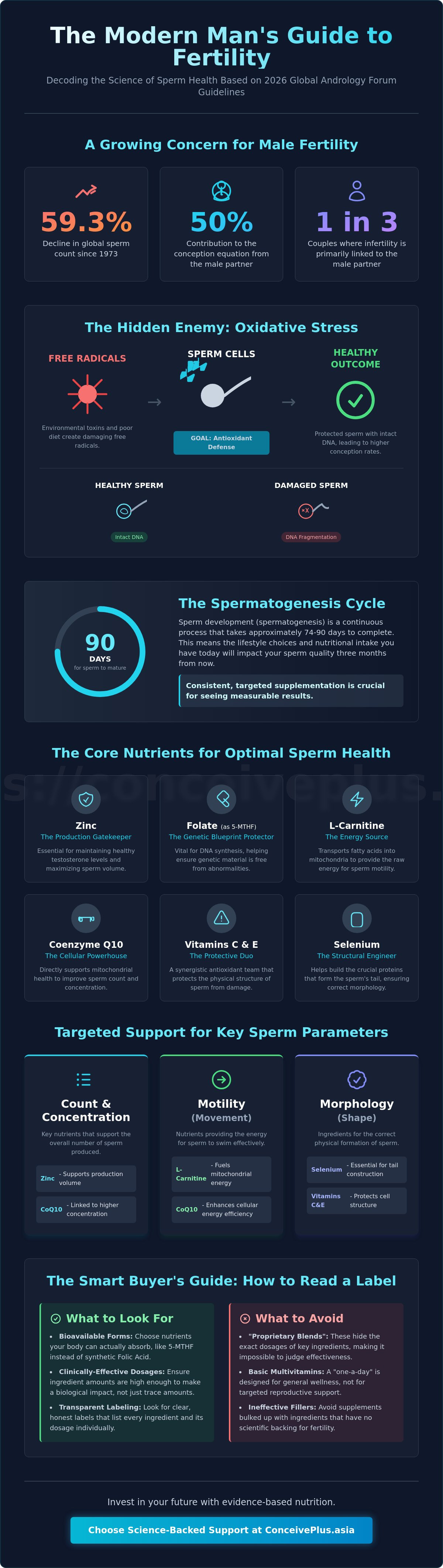
The situation is becoming more urgent. A 2023 meta-analysis confirmed a global decline in sperm counts of nearly 60% since 1973. This decline is driven by environmental toxins, rising obesity rates, and nutrient-depleted diets. Because of these factors, standard lifestyle choices often aren't enough, making targeted vitamins for male fertility a necessary tool for many men.
To better understand the biological foundation of these nutrients, watch this helpful video:
The Role of Oxidative Stress in Sperm Health
Sperm cells are uniquely vulnerable to damage. Their delicate cell membranes are rich in polyunsaturated fatty acids, which are easily attacked by free radicals. This process, known as oxidative stress, can cause DNA fragmentation. High levels of DNA fragmentation don't just make it harder to conceive; they're also linked to higher miscarriage rates. The 2026 Global Andrology Forum guidelines now emphasize that "antioxidant defense" is the primary goal of any effective fertility supplement. By neutralizing these free radicals, you protect the genetic integrity of your future child.
Beyond the Basic Multivitamin
You might think a standard daily multivitamin covers your bases, but that's rarely the case. General wellness supplements are designed to prevent basic deficiencies, not to optimize reproductive performance. Modern industrial farming has depleted soil of essential minerals, meaning even a "healthy" diet might leave you short on the micro-nutrients required for optimal sperm production. Standard multivitamins often lack the specific, high-potency dosages of Zinc, Selenium, and CoQ10 required to penetrate the blood-testis barrier and support cell health. Spermatogenesis is the biological process of sperm development that takes approximately 74 to 90 days to complete. Because this cycle is so long, your body needs a consistent, targeted supply of vitamins for male fertility that a generic "one-a-day" pill simply cannot provide.
The 'Big 5' Nutrients Proven to Support Sperm Quality
While many supplements claim to boost reproductive health, only a handful of ingredients have the clinical backing to prove they work. When you're selecting vitamins for male fertility, you should look for the "Big 5" nutrients that target specific biological functions within the testes. These aren't just general health boosters; they're the building blocks of healthy sperm.
Zinc acts as the gatekeeper of sperm production. It's highly concentrated in the testes and is essential for maintaining healthy testosterone levels and sperm volume. Folate follows closely in importance. It's vital for DNA synthesis, helping to ensure that the genetic material passed to your child is free from chromosomal abnormalities. For the sperm to reach its destination, it needs fuel. L-Carnitine provides this energy by transporting fatty acids into the mitochondria, the powerhouses of the cell. Coenzyme Q10 (CoQ10) also supports mitochondrial health, which clinical studies have linked to improved sperm count and concentration. Finally, Vitamins C and E work as a synergistic duo to protect the physical structure, or morphology, of the sperm from damage.
Nutrient-to-Parameter Mapping
One of the biggest mistakes men make is taking a "shotgun approach" to supplements without knowing what they're trying to fix. Different nutrients target different sperm parameters. If your concern is sperm count and concentration, CoQ10 and Zinc are your primary allies. If the issue is motility (how well the sperm swim), focus on L-Carnitine and CoQ10. For morphology (the shape and size of the sperm), Selenium is a critical mineral. It helps build the proteins in the sperm tail, ensuring they are formed correctly. Current 2026 clinical recommendations suggest that these nutrients are most effective when taken in specific, high-potency dosages rather than the trace amounts found in standard multivitamins.
The Power of Ingredient Synergy
Nutrients don't work in isolation. They often rely on "synergy" to be effective. For example, Zinc and Selenium work better together than they do alone, providing a more robust defense for the reproductive system. Similarly, Vitamin C actually regenerates Vitamin E after it has neutralized a free radical, allowing for continuous antioxidant protection. You can find deeper dives into this nutrient science on our fertility support blog. Understanding these relationships helps you choose a formula that maximizes the impact of each ingredient. If you're ready to start your journey with a balanced, expert-formulated blend, consider exploring fertility support options designed specifically for these biological needs.
Evaluating Supplements: How to Read a Male Fertility Label
Reading a supplement label often feels like deciphering a different language. When you're comparing vitamins for male fertility, the marketing on the front of the bottle matters much less than the fine print on the back. Many brands use cheap, synthetic versions of nutrients that the body struggles to absorb, which essentially wastes your money and time. To get the best results, you need to look beyond the brand name and evaluate the specific chemical forms of the ingredients provided.
One of the most important things to check is the form of Folate. Many mass-market supplements use Folic Acid, a synthetic version that a significant portion of the population cannot process efficiently due to genetic variations. Instead, look for 5-MTHF (Methylfolate), which is the bioactive form your body can use immediately. You should also be wary of "Proprietary Blends." These are often used to hide the fact that the most expensive and effective ingredients are included in tiny, ineffective amounts. A transparent label should list the exact milligram or microgram count for every single ingredient so you know exactly what you're putting into your body.
Bioavailability and Absorption
Absorption is the bridge between taking a pill and seeing actual improvements in sperm parameters. For example, minerals like Zinc are often sold as oxides or sulfates, which can cause stomach upset and have poor absorption rates. Choosing chelated minerals, such as Zinc Picolinate, ensures the nutrient is bound to an amino acid. This makes it much easier on your digestive system and more effective for supporting your reproductive health. The specific form of a vitamin is just as important as the total dosage listed on the bottle. In the case of CoQ10, Ubiquinol is generally preferred over Ubiquinone because it's the "reduced" form that the body uses for antioxidant protection, offering superior bioavailability for men who need targeted support.
Avoiding the 'Kitchen Sink' Approach
It's tempting to think that a supplement with 50 different ingredients is better than one with 10, but this "kitchen sink" approach can often backfire. Some nutrients are antagonistic, meaning they compete for the same absorption pathways in your gut. If a formula is overloaded with unnecessary fillers, you might not actually absorb the critical nutrients you need most. Many brands also practice "window dressing," where they include trendy herbs or extracts at sub-therapeutic doses just to put them on the label. This provides no clinical benefit. Before committing to a brand, it's helpful to read customer reviews to see which formulations men find easiest to tolerate daily. Finally, always check for third-party testing and manufacturing standards like Good Manufacturing Practice (GMP) certification to ensure the product is free from contaminants.
The 90-Day Window: Timing Your Supplement Strategy
Patience is arguably the most underrated part of using vitamins for male fertility. Many men start a supplement regimen and expect to see improvements in a few weeks. However, human biology follows a very specific clock. It takes approximately 74 days for a sperm cell to be produced from start to finish. Once produced, those cells need another 10 to 14 days to mature and become mobile as they travel through the reproductive tract. This means the sperm you produce today began its development nearly three months ago.
Because of this long cycle, you won't see measurable results in the first month. Every day, your body starts a new "batch" of sperm. If you skip your supplements for a week, that specific batch will lack the antioxidant protection and nutrient support required for optimal development. Consistency is the only way to ensure every stage of growth is covered. To track your progress effectively, doctors recommend a baseline semen analysis followed by a repeat test after a full 90 days of consistent supplementation. This provides a clear "before and after" picture of how your body is responding.
A Preconception Timeline
Viewing your journey as a three-month project helps manage expectations. During Month 1, your primary goal is building up nutrient stores. Your body is directing these vitamins to the tissues that need them most. By Month 2, the developing sperm are in their most vulnerable state. This is when the antioxidant defense we discussed earlier is most critical for protecting the sperm's DNA. Finally, in Month 3, the sperm reach full maturation. They've had a complete cycle of support, leading to peak quality for your conception attempts.
Maximizing the Vitamin Effect
Supplements are powerful, but they don't work in a vacuum. Certain lifestyle factors can "cancel out" the benefits of even the best vitamins for male fertility. Excessive heat is a major culprit. Keeping a laptop on your lap or spending too much time in hot tubs can physically damage sperm regardless of your nutrient intake. Smoking and heavy alcohol consumption also generate massive amounts of free radicals that can overwhelm your antioxidant defenses. Don't forget the basics like hydration. Seminal fluid is primarily water; staying hydrated ensures that the fluid is the right consistency for sperm to swim effectively. To align your peak sperm quality with your partner's cycle, use our ovulation calculator to identify the best days for conception. If you're ready to commit to a full cycle of support, you can explore fertility support bundles that provide a continuous supply for your 90-day window.
Comprehensive Support: Why Conceive Plus is the Choice for 2026
Choosing the right support for your fertility journey is about more than just picking a bottle off a shelf. It's about finding a partner that understands the biological hurdles you're facing. Conceive Plus has built its reputation on a commitment to transparency and high-quality manufacturing. We don't believe in "proprietary blends" that hide the truth about what you're consuming. Instead, our formulas provide clear, therapeutic dosages of the vitamins for male fertility that actually move the needle on sperm health.
Our approach is rooted in the latest 2026 Global Andrology Forum guidelines. We recognize that fertility is a team effort, which is why our products are designed to work together for both partners. By providing science-backed ingredients in their most bioavailable forms, we ensure that your body isn't working harder than it needs to. You get the protection your sperm requires during the critical developmental window without unnecessary fillers or artificial dyes.
Tailored for Male Physiology
Every ingredient in our male-focused formulas is there for a reason. We've prioritized the "Big 5" nutrients, including Zinc and Selenium, using forms that are gentle on the stomach for daily, long-term use. This is crucial because, as we've discussed, consistency over several months is the only way to see a real impact on sperm parameters. Our products are designed by fertility experts who specialize in the preconception phase. They understand that male reproductive health requires a specific balance of antioxidants to combat the oxidative stress caused by modern environmental toxins.
Simplifying the Journey
The road to fatherhood can feel complex, but your supplement routine shouldn't. Since the spermatogenesis cycle requires a minimum of 90 days, we've made it easier to stay committed to your goals. Our multi-month options ensure you never miss a dose during a critical "batch" of sperm production. You can explore our fertility bundles to start your 3-month plan with the best possible value. Beyond the supplements, you gain access to a wealth of expert resources and a community that understands your journey. We're here to provide the confidence you need to make the best decisions for your future family.
Take the Next Step in Your Fatherhood Journey
Taking charge of your reproductive health is one of the most proactive steps you can take for your future family. Success isn't just about luck. It's about giving your body the specific tools it needs during the 74 to 90-day spermatogenesis cycle. By focusing on the "Big 5" nutrients and choosing bioavailable forms like 5-MTHF, you ensure your sperm has the best possible defense against oxidative stress. This targeted approach is what separates effective support from generic multivitamins.
Conceive Plus is proud to be recommended by fertility clinics worldwide for our commitment to science and transparency. With thousands of positive customer reviews and a focus on high-bioavailability nutrients, we take the guesswork out of choosing vitamins for male fertility. You don't have to navigate this path alone or settle for ineffective supplements. Are you ready to optimize your sperm quality? Start your 90-day fertility journey with our expert-formulated bundles and give your future child the best possible start. Your commitment today builds the foundation for a healthy tomorrow.
Frequently Asked Questions
How long does it take for male fertility vitamins to work?
It takes a minimum of 90 days to see the full impact of vitamins for male fertility on your sperm health. This timeline is dictated by the biological process of spermatogenesis, which takes approximately 74 days, followed by two weeks of maturation. Because your body is constantly starting new production cycles, you need to provide consistent nutrient support for at least three months to ensure the entire "batch" of sperm has been protected.
Can male fertility vitamins improve sperm motility?
Specific nutrients can significantly improve sperm motility by providing the energy required for swimming. Ingredients like L-Carnitine and Coenzyme Q10 (CoQ10) act as fuel for the mitochondria within the sperm cells. When these powerhouses function efficiently, sperm have the endurance and speed necessary to reach the egg. Clinical studies show that consistent antioxidant intake helps maintain this movement by preventing oxidative damage to the sperm tail.
Are there any side effects to taking male fertility supplements?
Most men tolerate these supplements well without experiencing side effects. However, taking high doses of minerals like Zinc or iron on an empty stomach can occasionally lead to mild nausea or digestive discomfort. To prevent this, it's best to take your vitamins with a full meal and plenty of water. If you choose formulas with chelated minerals, you'll find they are much gentler on the digestive system than cheaper alternatives.
Do I still need vitamins if I have a healthy diet?
Even with a healthy diet, targeted vitamins for male fertility provide concentrated dosages that are difficult to obtain from food alone. Modern industrial farming has led to soil depletion, meaning many vegetables contain fewer minerals than they did decades ago. Additionally, the high levels of environmental toxins and oxidative stress we face in 2026 increase the biological demand for specific antioxidants like Selenium and Folate to protect reproductive cells.
Is Zinc or Selenium more important for sperm health?
Neither mineral is "more" important; they are both essential because they play different roles in the reproductive system. Zinc is the primary mineral for testosterone metabolism and the initial production of sperm cells. Selenium is critical for the development of the sperm tail and overall morphology. A deficiency in either can lead to fertility struggles, which is why experts recommend a balanced formula that includes both minerals in therapeutic amounts.
Should I take fertility vitamins if I've already had a successful pregnancy?
Past success is not a guarantee of current fertility, as sperm health can decline due to aging, stress, or lifestyle changes. Secondary infertility is a common issue where couples struggle to conceive again after a previous successful pregnancy. Since sperm quality is a "snapshot" of your health over the last three months, providing extra nutritional support ensures that your current sperm parameters are optimized for a new conception attempt.
Can I take these vitamins with other medications?
You should always consult with a healthcare professional before starting supplements if you are on prescription medication. While most vitamins are safe, certain antioxidants like CoQ10 or Vitamin E can interact with blood thinners or blood pressure medications. A doctor can help you establish a safe schedule to ensure your supplements don't interfere with the efficacy of your existing treatments while still supporting your reproductive goals.
How do I know if the vitamins are actually working?
A follow-up semen analysis after 90 days is the only definitive way to know if your supplements are working. Because improvements in sperm count, motility, and morphology happen at a microscopic level, you won't "feel" a physical difference in your daily life. Comparing a baseline test with a new analysis after three months of consistent use will provide the data needed to confirm that your nutrient strategy is successful.


