
How to Improve Uterine Lining Thickness: A Complete Guide for 2026


What if the key to your next successful transfer isn't just the quality of the embryo, but a radical shift in how you prepare the soil? When you're facing the anxiety of a cancelled cycle, learning how to improve uterine lining thickness can feel like trying to solve a puzzle with missing pieces. You've likely felt the frustration of watching the ultrasound screen, hoping for that "triple line" to appear, only to be met with measurements that fall short of the goal. It's exhausting to feel like your body isn't cooperating; however, you aren't helpless against your biological factors.
This guide provides the most effective natural and medical strategies to help you reach that optimal 7 to 14mm thickness for successful implantation. We'll break down the latest 2026 clinical breakthroughs, including how Platelet-Rich Plasma (PRP) therapy helps 68% of women with a history of thin endometrium achieve adequate growth. You'll get a clear roadmap of daily actions, from nutrient timing to vascular health, designed to build your confidence and your lining for the journey ahead.
Key Takeaways
- Understand why 7mm is the critical benchmark for successful implantation and how medical professionals use ultrasound to track your progress.
- Learn how to improve uterine lining thickness through targeted nutrients like L-Arginine and Vitamin E that specifically boost endometrial blood flow and cell quality.
- Discover natural techniques to increase pelvic circulation, including the "warm uterus" concept and specific low-impact exercises that prioritize uterine blood supply.
- Explore advanced 2026 medical treatments for resistant linings, such as Platelet-Rich Plasma (PRP) therapy and the strategic use of vasodilators.
- Establish a realistic three-month timeline for cellular changes and learn what specific markers to look for in your mid-cycle ultrasound reports.
What Is the Ideal Uterine Lining Thickness for Pregnancy?
The endometrium is the inner layer of the uterus where an embryo must plant its roots. To understand What is the endometrium? is to understand the foundation of early pregnancy. Fertility specialists measure this tissue using a transvaginal ultrasound, which provides a cross-section view of the uterine cavity. This measurement is taken at the thickest part of the fundus, giving your medical team a clear picture of whether the "soil" is ready for the "seed."
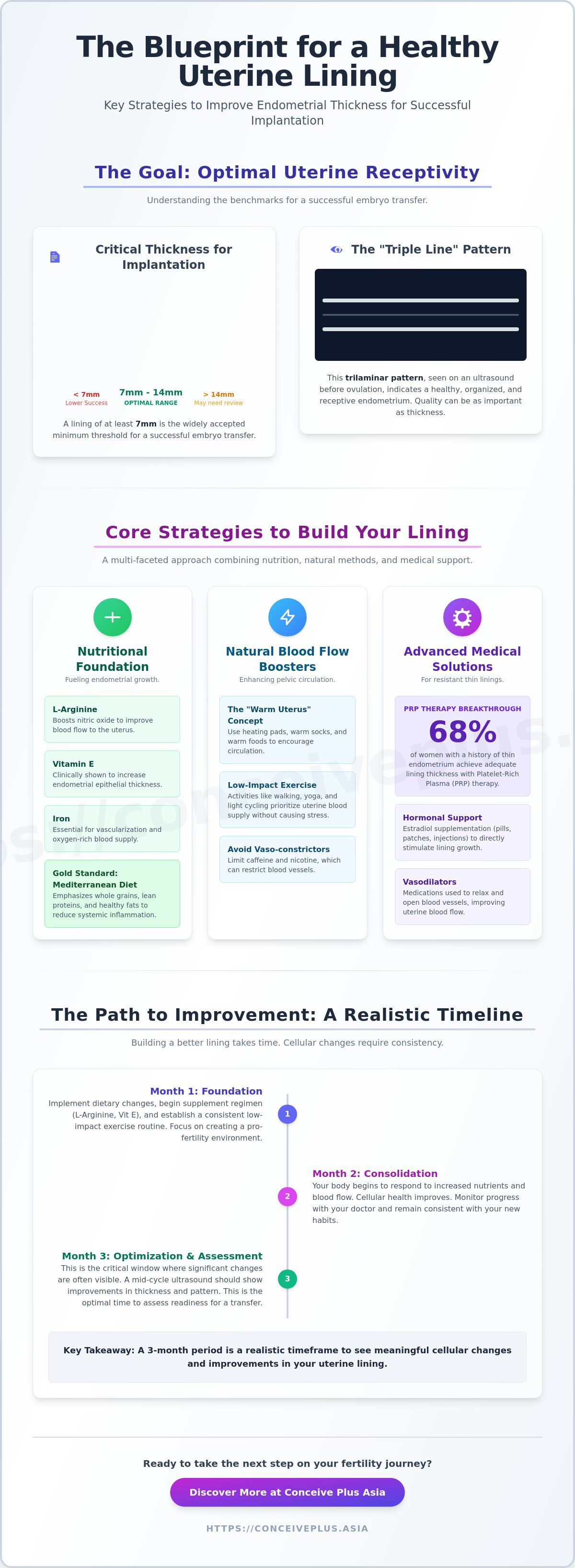
Thickness serves as a primary biomarker for uterine receptivity. While every body is different, the medical consensus identifies 7mm as the minimum threshold for a successful transfer. Research suggests that a lining thinner than this can significantly lower implantation rates. However, thickness is only half the story. Doctors also look for a "trilaminar" or triple-line pattern. This specific appearance indicates that the lining is organized, healthy, and ready to receive an embryo. A 10mm lining with a poor pattern can sometimes be less receptive than a 7mm lining with a perfect triple-line structure.
To better understand this concept, watch this helpful video:
Why does the lining stay thin for some women? Common culprits include low estrogen levels, poor blood flow to the pelvic region, or scarring from previous procedures like a D&C. Chronic infections or long-term use of certain medications like Clomid can also play a role. Identifying these underlying causes is the first step in learning how to improve uterine lining thickness effectively for your next cycle.
Measuring at the Right Time
Timing is everything. Measuring the lining during your period won't give an accurate picture because the tissue has just shed. The most critical measurement happens during the periovulatory phase, just before ovulation. This is when the lining should be at its peak thickness and highest quality. Using an ovulation calculator helps you and your doctor coordinate these scans for the most reliable data. As you move from the follicular phase to the luteal phase, the lining changes from a proliferative state to a secretory one, becoming more "sticky" for the embryo.
The Role of Estrogen in Endometrial Growth
Estrogen acts as the primary signal for growth. It tells the functionalis layer of the endometrium to proliferate and thicken. If you notice symptoms like light periods or hot flashes, it might indicate low systemic estrogen. However, some women have normal blood levels but still struggle with a thin lining. This often points to a localized issue where the uterine receptors aren't responding correctly to the hormones present in the body. In these cases, how to improve uterine lining thickness becomes a matter of improving blood flow and receptor sensitivity rather than just adding more hormones.
Dietary and Nutritional Strategies to Support Growth
Dietary choices form the biochemical foundation for your endometrium. If you're researching how to improve uterine lining thickness, you'll find that specific amino acids and vitamins act as direct catalysts for tissue growth. L-Arginine, for example, is an amino acid that boosts nitric oxide production. This process relaxes the smooth muscles of the uterine arteries, allowing for better blood flow. Similarly, Vitamin E has been clinically observed to increase the epithelial thickness of the endometrium, making it a staple for those struggling with a thin lining.
Iron is another non-negotiable element. Anemia or low ferritin levels can lead to poor vascularization, meaning the uterus doesn't receive the oxygen-rich blood it needs to build a robust lining. By 2026, the Mediterranean diet remains the gold standard for fertility, emphasizing whole grains, lean proteins, and healthy fats. This dietary pattern reduces systemic inflammation, which is often a hidden barrier to successful implantation. While nutrition is foundational, some cases require Medical interventions for a thin lining if dietary changes alone aren't enough to reach that 7mm goal.
Superfoods for Vascular Health
Specific foods act as natural vasodilators. Beets and pomegranates are rich in nitrates that support pelvic circulation. Including these in your daily routine can provide a gentle, natural boost to the blood volume reaching your reproductive organs. Omega-3 fatty acids, found in walnuts and fatty fish, help manage uterine inflammation and improve the quality of the lining's "sticky" surface. Don't overlook simple hydration; blood volume is critical for endometrial perfusion. If you're dehydrated, your body will prioritize vital organs over the uterus, potentially stalling growth.
Targeted Supplementation
Supplements can bridge the gap when diet alone isn't sufficient. Combining antioxidants like CoQ10 with lining-supportive nutrients helps protect developing cells from oxidative stress. Minerals like Selenium and Zinc also play vital roles in maintaining the hormonal balance required for the proliferative phase. To simplify your daily routine, many women opt for fertility bundles that combine these essential elements into one cohesive plan. Taking a proactive approach to your nutrition helps you feel more in control of your journey. You can explore a wide range of fertility support options to find the right fit for your specific needs.
Improving Blood Flow to the Uterus Naturally
Blood flow is the silent engine of endometrial growth. Without a steady supply of oxygen and nutrients, the lining remains stagnant regardless of how much estrogen is in your system. Traditional Chinese Medicine often refers to a "cold uterus," a concept that describes poor pelvic circulation. Keeping the pelvic area warm with heat packs or warm clothing isn't just about comfort; it supports the dilation of blood vessels. When you're looking for how to improve uterine lining thickness, addressing these mechanical barriers to blood flow is just as vital as hormonal support.
Acupuncture has gained significant clinical traction for its ability to lower the pulsatility index, which measures resistance in the uterine arteries. By reducing this resistance, more blood can reach the uterine tissues to support the proliferative phase. For a comprehensive look at various interventions, you can explore the Thin Lining Toolkit, which outlines how different modalities work together to optimize the uterine environment. Combining these natural approaches with your medical protocol creates a multi-layered strategy for success.
Physical Movements for Pelvic Circulation
Not all exercise is created equal when you're trying to thicken your lining. High-intensity cardio, like sprinting or heavy lifting, often diverts blood away from the core and toward your large muscle groups. Instead, focus on moderate movements that prioritize the pelvic floor. Fertility-focused yoga poses are particularly effective. Poses like "Legs Up The Wall" (Viparita Karani) encourage blood to pool in the pelvic region, while "Butterfly Pose" (Baddha Konasana) opens the hips and increases circulation to the reproductive organs. Some practitioners also recommend femoral artery massage to briefly increase blood pressure in the iliac arteries, though this should only be done with professional guidance.
Stress Management and Vasoconstriction
Chronic stress creates a biological environment that is hostile to uterine growth. When you're in a state of 'fight or flight,' your body produces cortisol and adrenaline, which cause systemic vasoconstriction. This response prioritizes blood flow to the heart and lungs while restricting it to "non-essential" organs like the uterus. Daily mindfulness practices or deep breathing exercises help shift your nervous system back into the 'rest and digest' state. Sleep hygiene is another critical factor. The lining grows and repairs itself most efficiently during deep restorative sleep, making a consistent eight-hour window essential for your roadmap. If you're looking for more tips on managing the emotional side of this journey, check out our latest fertility blog for expert advice.
Medical Interventions for Resistant Thin Lining
When natural methods and standard estrogen therapy don't yield the necessary growth, medical science offers advanced alternatives. Clinical data from 2025 and 2026 has solidified several "off-label" and regenerative treatments as effective solutions for a thin endometrium. For many patients, understanding how to improve uterine lining thickness requires a shift toward these clinical interventions. Vaginal Sildenafil (Viagra) is one such tool; it works by dilating the uterine arteries to improve blood flow directly at the source. This targeted approach bypasses some of the systemic side effects of oral medications while focusing on vascular expansion within the pelvic cavity.
Regenerative medicine has become a cornerstone for treating "refractory" or resistant linings. Platelet-Rich Plasma (PRP) therapy involves infusing the uterus with a concentrated dose of your own platelets to stimulate tissue repair. Recent meta-analyses show that 68% of women with a history of thin endometrium achieved adequate thickness after PRP treatment. On average, this therapy has been shown to increase endometrial thickness from 6.09 mm to 8.67 mm, significantly boosting pregnancy rates from a baseline of 12-15% up to 28-35%. If the issue is immune-mediated, your specialist might suggest Granulocyte Colony-Stimulating Factor (G-CSF) infusions. G-CSF has been shown to increase thickness by 2 to 4 mm in 60-70% of patients who didn't respond to standard estrogen.
Sometimes the barrier isn't hormonal or vascular, but structural. A hysteroscopy allows your doctor to look inside the uterine cavity for scarring, often called Asherman’s Syndrome. Removing this scar tissue can restore the lining's ability to grow. Before moving to your next transfer, you can explore comprehensive fertility solutions that support your clinical protocol.
Hormonal Protocols in IVF
The delivery method of your hormones matters. Many specialists now prefer vaginal estrogen over oral tablets because it provides a higher local concentration in the uterine tissues while bypassing the liver. If your lining is a "slow grower," an extended estrogen priming phase might be necessary to give the tissue more time to proliferate. Additionally, low-dose aspirin is frequently prescribed to prevent micro-clots in the developing lining, ensuring that the tiny blood vessels supplying the endometrium remain open and functional throughout the cycle.
When to Consider These Treatments
A lining is typically defined as "resistant" if it stays below 7mm despite high-dose estrogen therapy over multiple cycles. If you find yourself in this 2.4% of IVF patients, it's time to have a direct conversation with your specialist about the latest 2026 protocols like PRP or G-CSF. Don't feel like you have to navigate these complex medical choices alone. Reading success stories and reviews from others who have overcome similar biological hurdles can provide both clarity and much-needed hope for your next steps.
The Timeline: How Long Does It Take to Improve?
Patience is perhaps the most difficult part of any fertility journey. When you're eager to move forward with a transfer, waiting for biological changes can feel like an eternity. However, significant cellular and vascular improvements typically require a three-month window. This 90-day timeframe aligns with the natural cycle of tissue regeneration and allows enough time for new blood vessels to form within the endometrial functionalis layer. If you're focused on how to improve uterine lining thickness, viewing this as a seasonal preparation rather than a quick fix will help manage your expectations and reduce cycle-related anxiety.
Tracking your progress requires more than just a single ultrasound. You should look for trends in your mid-cycle reports over several months. While the total millimeters matter, pay close attention to the transition of the lining's appearance. A shift from a "blurry" or thin appearance to a distinct triple-line pattern is a major victory, even if the thickness only increases by a small margin initially. Many clinics now suggest a "Rest Cycle" strategy. This involves taking a month or two off from active transfer attempts to focus exclusively on intensive lining preparation. This strategic pause allows your body to respond to nutritional changes and physical therapies without the added stress of exogenous hormones or transfer deadlines.
Once you've dedicated time to these protocols, the next logical step is a mock cycle. During a mock cycle, your medical team monitors your lining's response to your specific protocol without the intention of transferring an embryo. This provides a "dress rehearsal" that can confirm if your strategies are working or if you need to pivot to more advanced medical interventions like PRP or G-CSF before the real transfer day arrives.
Monthly Milestones
- Month 1: Foundations. Focus on the basics of nutrition, consistent hydration, and identifying inflammatory triggers in your diet. This is the time to stabilize your iron levels and begin a Mediterranean-style eating plan.
- Month 2: Circulation. Incorporate physical therapies like acupuncture or fertility yoga. This is also when targeted supplements, such as Vitamin E and L-Arginine, begin to have a measurable impact on your vascular health.
- Month 3: Refinement. Work closely with your clinic for mid-cycle monitoring. This month is about seeing the cumulative results of your efforts and deciding if you're ready for a transfer or if clinical interventions are necessary.
Staying Informed
Knowledge is a powerful tool against the feeling of helplessness. Keeping a fertility journal can help you correlate lifestyle changes, such as increased walking or new supplements, with your ultrasound results. This data is invaluable during consultations with your specialist. It's also helpful to stay up to date with the latest research and community insights on the Conceive Plus blog. While you're working on how to improve uterine lining thickness, remember that maintaining a positive but realistic mindset is essential. Your body is a dynamic system, and with a clear roadmap and consistent daily actions, you're giving yourself the best possible chance for a successful implantation.
Your Roadmap to a Healthier Endometrium
Building a receptive environment for your embryo is a journey that combines biological science with consistent daily habits. We've explored how reaching the 7 to 14mm threshold involves more than just hormones; it's a multi-faceted process of improving vascular health, managing inflammation, and utilizing cutting-edge treatments like PRP therapy. Understanding how to improve uterine lining thickness gives you the power to transform from a passive observer into an active participant in your fertility journey. By committing to a 90-day preparation window, you give your body the time it needs to regenerate and optimize the uterine environment for implantation.
You don't have to navigate this preparation alone. Our products are clinically formulated for reproductive health and recommended by fertility clinics worldwide to support your body's natural processes. With thousands of positive reviews from successful parents, we're here to provide the nutritional foundation you need to feel confident in your next cycle. Shop our Fertility Support Bundles to optimize your cycle today and take a proactive step toward your goal of parenthood. You have the tools, the knowledge, and the roadmap; now it's time to let your body lead the way.
Frequently Asked Questions
Can I get pregnant with a 6mm uterine lining?
Pregnancy is possible with a 6mm lining, but clinical success rates are notably lower than they are at the 7mm threshold. While some embryos do implant in thinner linings, most fertility specialists prefer to see at least 7 to 8mm of growth to ensure the tissue is receptive. If your lining is consistently thin, your doctor might explore medications to improve blood flow or hormonal support before proceeding with a transfer.
What foods thicken the uterine lining quickly?
No single food can thicken the lining overnight, but nitrate-rich foods like beets and pomegranates support the process by boosting nitric oxide. These natural vasodilators help expand blood vessels in the pelvic region. Incorporating lean proteins high in L-Arginine, such as turkey or pumpkin seeds, provides the amino acids necessary for tissue proliferation. Focus on a high-antioxidant diet to protect developing endometrial cells from oxidative stress.
How much Vitamin E should I take for endometrial thickness?
Clinical studies often utilize 600mg of Vitamin E daily to support endometrial growth. This dose has been shown to improve uterine artery blood flow and increase the epithelial thickness of the lining. However, you should always consult your specialist before starting this regimen. Vitamin E is a fat-soluble vitamin, so taking excessive amounts without medical supervision can lead to toxicity or interfere with other fertility medications.
Does walking help improve uterine blood flow?
Walking is one of the most effective ways to improve pelvic circulation without overtaxing your body. Unlike high-intensity interval training, which can divert blood toward your skeletal muscles, moderate walking keeps the blood flowing toward your reproductive organs. Aim for 30 minutes of brisk walking daily. This consistent movement helps maintain a steady supply of oxygen and nutrients to the uterus, which is essential when learning how to improve uterine lining thickness.
Can stress actually make my uterine lining thinner?
High stress levels trigger the release of cortisol and adrenaline, which cause your blood vessels to constrict. This physiological response limits the amount of blood reaching the uterus, potentially stalling the growth of the lining. When your body is in a state of chronic stress, it prioritizes vital organs over the reproductive system. Practicing daily mindfulness or restorative yoga can help lower these hormone levels and promote better vascularization.
What is the best supplement for a thin lining in 2026?
In 2026, the most effective approach involves a combination of L-Arginine and Vitamin E rather than a single magic pill. L-Arginine supports the vascular expansion needed for growth, while Vitamin E improves the quality of the tissue itself. Many women find that a comprehensive fertility bundle is the best option. These products ensure you get the correct ratios of Zinc, Selenium, and antioxidants to support the hormonal balance required for how to improve uterine lining thickness.
How many days after my period should the lining be measured?
The most accurate measurement occurs during the periovulatory phase, typically between days 10 and 14 of a standard cycle. This is when the lining should be at its thickest point just before ovulation. Measuring too early in the follicular phase won't show the full growth potential. Your doctor will likely schedule an ultrasound around this time to check for both the thickness and the triple-line pattern.
Is a 12mm lining too thick for implantation?
A 12mm lining is generally considered excellent and falls well within the optimal 7 to 14mm range for implantation. While a lining over 15mm can sometimes indicate issues like polyps or hyperplasia, 12mm provides a lush, nutrient-rich environment for an embryo. If your lining reaches this thickness with a clear trilaminar pattern, it's a very positive sign for your upcoming cycle.
Trusted by Couples in Over 70 Countries
Start Your Fertility Journey With the Right Support
Conceive Plus Fertility Lubricant is specially formulated to be compatible with sperm, eggs, and embryos. Whether you are just starting out or have been trying for a while, our products are designed to work with your body — not against it.
Explore Fertility Lubricant →


